
A priori versus post hoc power analysis in nursing is not simply a choice between running the same calculation before or after data collection. Each analysis answers a different question, and confusing them can make a dissertation methodology appear more certain than it was.
A priori power analysis
An a-priori analysis calculates the sample required before recruitment. The student specifies the planned test, target effect, alpha, desired power and design inputs. This prospective method supports planning. Therefore, document it in the protocol or methodology and link it to the primary outcome.
Post-hoc power analysis
A post-hoc analysis calculates power for a specified sample and effect after data exist. When researchers enter the observed effect, calculated power largely mirrors the p-value and adds little information. Therefore, do not use it to claim that a non-significant result proves the absence of an effect.
Sensitivity analysis is often better after recruitment
When a dissertation has a fixed sample, sensitivity analysis asks what minimum effect could be detected at the chosen alpha and power. This directly describes the limitation created by the available sample without pretending the recruitment target was prospectively calculated.
| Analysis | Timing | Main output | Best purpose |
|---|---|---|---|
| A priori | Before recruitment | Required sample | Design and ethics planning |
| Sensitivity | Before or after sample is fixed | Minimum detectable effect | Feasibility and limitation assessment |
| Post hoc | After sample/effect are specified | Calculated power | Limited scenario exploration |
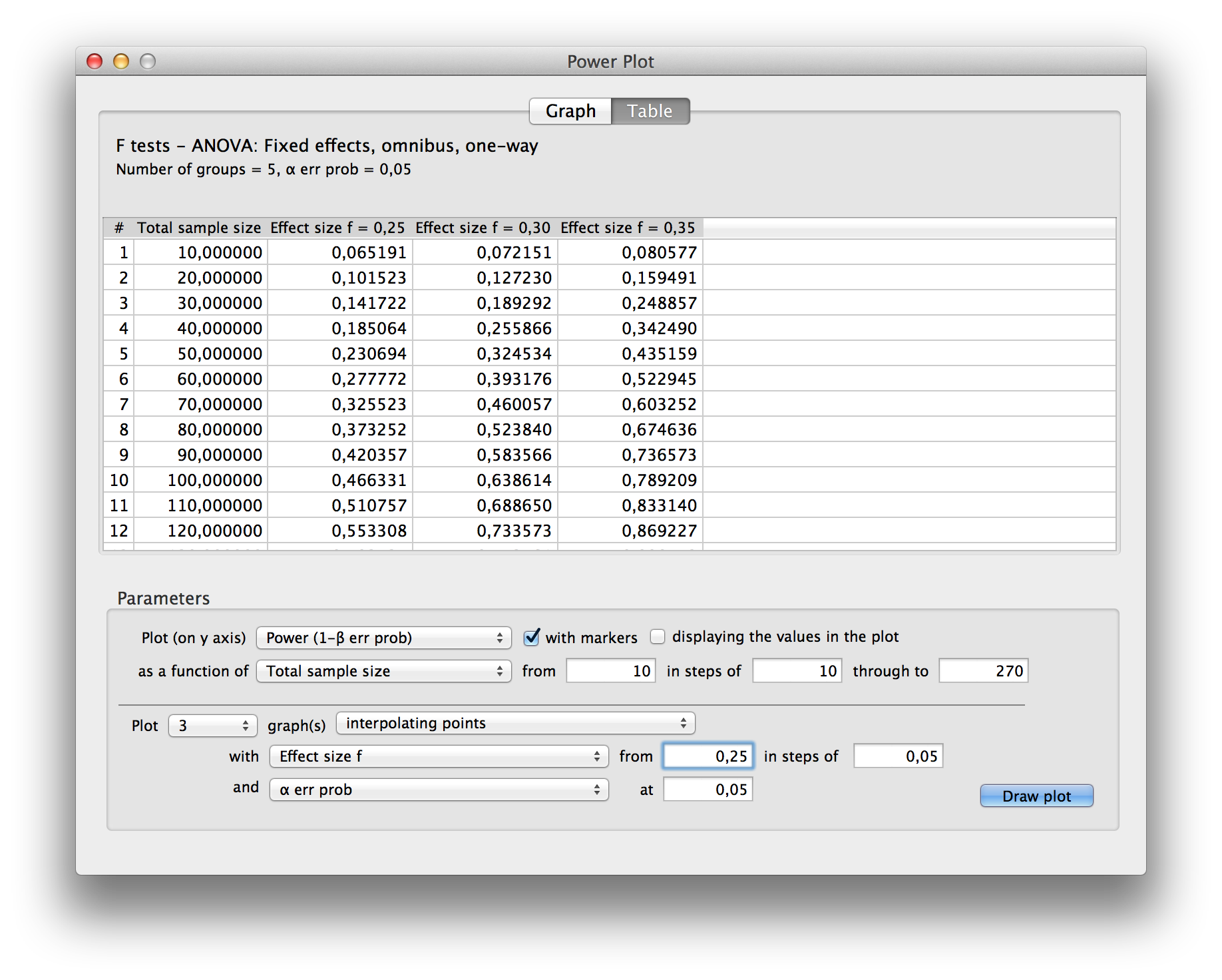
Why this comparison matters: The graph and table let researchers compare a-priori, sensitivity and other planning scenarios transparently. In addition, a nursing dissertation must report when the researcher conducted the selected analysis and which question it genuinely answers.
Example from a nursing dissertation
A student plans to compare mean burnout scores between two nursing settings. Before recruitment, an a-priori t-test calculation uses a justified effect, alpha 0.05 and power 0.80 to determine the target. However, if the student later obtains only 70 usable responses, a sensitivity analysis can show what standardised difference this sample could reliably detect. The discussion should then use effect estimates and confidence intervals to explain uncertainty.
How to write each approach
Use a timing-and-output record: state when the decision was made, which quantity was fixed and which quantity the analysis returned. In a prospective calculation the output is a required sample; in sensitivity analysis it is a detectable effect for a fixed sample. Keep that distinction visible in the methods section rather than repeating a software tutorial.
Why retrospective rewriting is risky
Changing the effect or test after seeing the data can produce a convenient story but weakens transparency. Academic integrity requires distinguishing planned decisions from later exploratory analyses. If the protocol changed, explain why and discuss the consequences.
Frequently asked questions
Which analysis should I put in my methodology?
Use the genuine prospective analysis if you conducted one. Otherwise, describe the actual recruitment basis and consider a transparent sensitivity analysis.
Can post-hoc power explain a non-significant result?
Confidence intervals and detectable-effect analysis are generally more informative.
Is sensitivity analysis only for failed recruitment?
No. For example, it is useful whenever feasibility fixes the sample, including secondary datasets and service-evaluation records.
Can I run all three in G*Power?
G*Power supports multiple analysis types, but the software option must match the question you are trying to answer.
Related Nursing Guides
- Nursing Likert-Scale Data in SPSS: Analysis Guide
- Nursing Regression Analysis in SPSS for Dissertations
- Statistical Power in Nursing Research: Avoid Weak Studies
Conclusion
A-priori power analysis supports prospective sample planning; sensitivity analysis clarifies what a fixed sample can detect; post-hoc observed power has limited interpretive value. Reporting the timing and purpose honestly produces a stronger nursing dissertation.
Continue with our nursing SPSS sample-size and power analysis service, SPSS data-analysis service, statistical-test selection guide, SPSS output interpretation guide, or contact us.
References
- Faul, F., Erdfelder, E., Lang, A.-G. and Buchner, A. (2007) ‘G*Power 3: A flexible statistical power analysis program for the social, behavioral, and biomedical sciences’, Behavior Research Methods, 39, pp. 175–191.
- Faul, F., Erdfelder, E., Buchner, A. and Lang, A.-G. (2009) ‘Statistical power analyses using G*Power 3.1’, Behavior Research Methods, 41, pp. 1149–1160.
- Kang, H. (2021) ‘Sample size determination and power analysis using the G*Power software’, Journal of Educational Evaluation for Health Professions, 18, 17.
- Lakens, D. (2022) ‘Sample size justification’, Collabra: Psychology, 8(1), 33267.