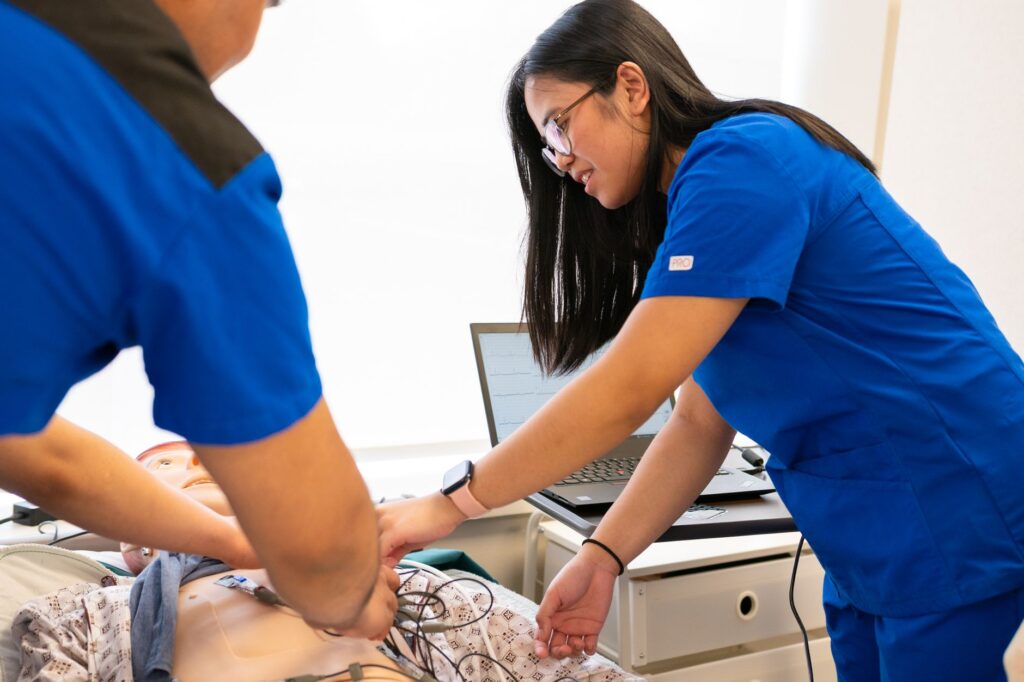
A nursing simulation debrief reflection explains what you learned from a simulated scenario and the discussion that followed. Choose one significant decision, examine what shaped it, use appropriate evidence and explain how you would approach a similar situation in future. This guide shows you how to turn a debrief into an analytical nursing assignment while keeping the experience authentic.
What is a nursing simulation debrief reflection?
A simulation debrief reflection is an account of learning from a simulated clinical experience and its facilitated review. The simulation might involve a manikin, simulated patient, virtual scenario or role play. The debrief gives participants an opportunity to discuss actions, reasoning, communication and alternatives.
Your assignment is not a transcript of that discussion. Its purpose is to explain what you noticed, why you responded as you did, what the debrief helped you reconsider and what you will do with that learning. The INACSL Healthcare Simulation Standards of Best Practice describe debriefing, feedback and guided reflection as part of the learning process.
How do you choose a useful incident?
Read the assessment brief first. Some programmes specify a particular simulation, learning outcome or reflection model. Then choose a short moment that gives you enough detail to analyse. A broad account of everything that happened leaves little room for a reasoned discussion.
- Recognising a change in the simulated patient’s condition.
- Deciding when and how to ask for assistance.
- Sharing observations during a team handover.
- Responding to an unexpected question from a simulated patient.
- Reconsidering an assumption after facilitator feedback.
Use only your own experience and the materials you are permitted to discuss. Do not present a simulated event as real patient care. Follow your programme’s rules on simulation confidentiality and do not identify classmates or facilitators unnecessarily.
How should you structure a nursing simulation debrief reflection?
Use the model named in your brief. If no model is required, the following sequence offers a practical starting point. Your headings may differ, but the connection between experience, analysis and action should remain clear.
1. What happened?
Briefly introduce the scenario, your role and the point you selected. Give only details the reader needs to understand your decision. Separate what the simulation showed from what you assumed at the time.
2. What were you thinking and feeling?
Identify a thought or emotion that influenced your response. For example, uncertainty about whether a change was significant may have affected how quickly you requested help. Avoid simply listing feelings; explain their possible connection to your actions.
3. What did the debrief reveal?
Describe a specific question, observation or piece of feedback that changed or confirmed your understanding. Explain how the debrief influenced your interpretation. Do not claim that a facilitator said something unless it is true to your experience.
4. Why did the situation develop as it did?
Consider more than one explanation. Knowledge, communication, task allocation and the simulation environment may all matter. Compare your initial reasoning with relevant evidence and acknowledge what you cannot know from the scenario. Avoid blaming one person for a team or system issue.
5. What will you do differently?
Finish with an achievable action. State what you will practise, where you will obtain feedback and how you will judge progress. Follow your placement’s policies and seek appropriate supervision for clinical decisions.
What does analysis look like in a worked example?
Fictional illustration: During a simulated deterioration scenario, a student noticed that the patient’s observations had changed but waited while trying to complete another task. During debriefing, the team discussed how competing tasks affected communication. This example is for learning only and must not be copied as a personal experience.
A descriptive sentence might say: “I was worried, and then the team discussed what happened.” It identifies a feeling and a discussion, but it does not explain the significance of either.
A more analytical approach would connect the details: “I initially focused on finishing the assigned task and did not communicate the changed observations promptly. The debrief helped me recognise that my uncertainty and the absence of an explicit team handover contributed to the delay. In a future simulation, I would practise stating the change clearly and asking my supervisor for feedback on the timing and clarity of my escalation.”
This example still needs the student’s genuine circumstances and suitable evidence. It does not establish that the same response would be appropriate for every patient. In practice, use the current local escalation policy, your scope of practice and the support of the supervising clinician.
How do you use evidence without losing your personal reflection?
Evidence should help you interpret a decision, not replace your own account. First identify the learning point. Next select a source that directly addresses it, such as a simulation standard, communication guidance or an appropriate study. Finally explain whether the source supports, challenges or qualifies your interpretation.
For instance, if you are analysing the learning process, the INACSL debriefing standard may help explain why guided discussion matters. If you are examining structured communication, consult the guidance your programme or clinical setting uses. Do not assume a source proves that your particular action caused a clinical outcome.
Use your university’s required referencing style and verify each source before citing it. For broader support with academic reflection, see how to write a nursing reflective essay. For the communication framework itself, read the nursing SBAR handover guide.
What should a practical action plan include?
A useful action plan describes a behaviour you can practise and a way to review it. A vague promise to “communicate better” is difficult to assess. Instead, decide which skill needs attention and identify a suitable learning opportunity.
- Action: practise a concise escalation during a supervised simulation.
- Support: ask a facilitator or practice assessor for specific feedback.
- Review: compare the feedback with the communication requirements in the programme or local policy.
- Next step: repeat the exercise and reflect on what changed.
Adapt the plan to the opportunities available to you. Do not promise an activity or claim a result that did not happen. A realistic plan also explains when you will seek further help if you remain unsure.
Which mistakes weaken a simulation reflection?
- Retelling the whole scenario: shorten the description and devote more space to reasoning and learning.
- Writing only about feelings: explain how those feelings influenced decisions and what changed during debriefing.
- Ignoring feedback: identify a specific debrief insight and show how it affected your interpretation.
- Inventing evidence or experience: distinguish an illustrative example from an event you actually experienced.
- Using evidence as decoration: explain how each source informs the learning point.
- Making an unmeasurable action plan: specify a skill, an opportunity to practise and a feedback route.
Frequently asked questions
Can I use first person?
Often, first person helps you explain your own decisions and learning. Check the assessment brief and your institution’s academic writing guidance.
Does the reflection have to describe a mistake?
No. You can analyse a successful action, a difficult decision or a point of uncertainty. Explain what supported the action and what might need adapting in a different context.
Should I include everything said during the debrief?
No. Select the feedback that is relevant to your learning point and use it accurately. Follow any confidentiality requirements set by your programme.
Can a simulation reflection be used as evidence of clinical competence?
It may contribute to learning or assessment if your programme permits it, but it does not automatically demonstrate competence in every clinical setting. Follow the assessment criteria and supervision requirements.
Get nursing essay help with your reflection
If you need feedback on the structure, evidence or action plan in your own draft, review our nursing assignment support. Share your brief and marking criteria, and keep the reflection grounded in your genuine learning.
Get My Nursing Assignment Quote
Reference
International Nursing Association for Clinical Simulation and Learning (INACSL) (n.d.) Healthcare Simulation Standards of Best Practice. Available at: https://www.inacsl.org/healthcare-simulation-standards-of-best-practice (Accessed: 27 October 2026).