
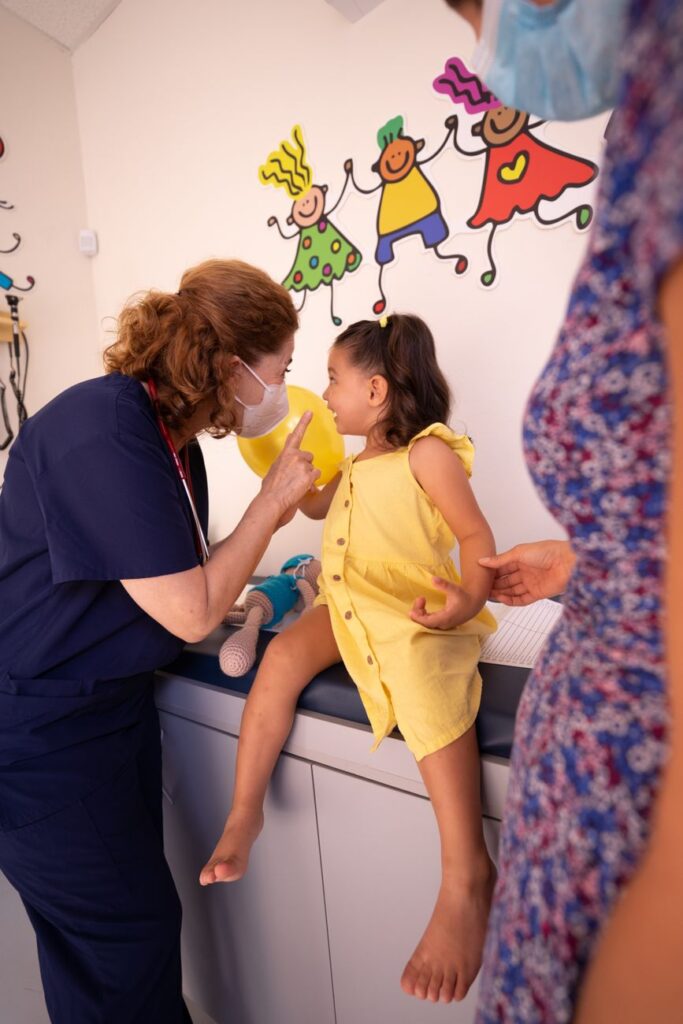
A children’s nursing dissertation needs more than a paediatric topic. The research question, evidence, method and ethics must reflect age, development, communication, family involvement, safeguarding and the child or young person’s own perspective. Children should not be treated as smaller versions of adult participants or patients.
Strong projects usually focus on one age group, condition, care process, service or experience and explain clearly what the nursing contribution is. A narrower question also makes literature searching, ethical planning and interpretation more defensible.
What makes a strong children’s nursing dissertation?
- A clearly defined child or young-person population.
- A question that is relevant to children’s nursing practice.
- Evidence that is appropriate to the developmental stage.
- A realistic research or review design.
- Clear distinction between child and parent perspectives.
- Age-appropriate consent, assent and communication planning.
- Safeguarding and confidentiality procedures that are explicit.
- Recommendations proportionate to the design and evidence.
Choose a focused child-health problem
Topics can include pain, diabetes, asthma, epilepsy, cancer care, disability, neurodiversity, medication safety, transition to adult services, mental health, family communication, digital health, school nursing, palliative care and health inequalities.
“Paediatric care” or “children with long-term conditions” is usually too broad. A more workable question might examine how school-age children experience preparation for painful procedures, or how parents and adolescents experience transfer from paediatric to adult diabetes services.
Check that the question allows nursing analysis. A dissertation centred only on disease biology may not meet nursing learning outcomes unless it connects the evidence to assessment, symptom management, communication, education, safety, advocacy or care coordination.
Use a framework only when it clarifies the question
| Framework | Useful for | Example |
|---|---|---|
| PICO | Intervention effectiveness | Education versus usual care for inhaler technique |
| PICo | Experience questions | Adolescents’ experience of transition in diabetes services |
| SPIDER | Qualitative or mixed-method evidence | Parents’ views of home monitoring after discharge |
| PCC | Scoping review | Digital support for children with long-term conditions |
Define the age range, setting, condition and perspective explicitly. If the dissertation includes family data, state whether the question concerns the child, parent, sibling or combined family experience.
Choose the project type realistically
A literature review, systematic review or scoping review may be more feasible than direct recruitment where access to children, specialist clinics or sensitive data is limited. Primary research can be appropriate, but it adds consent, safeguarding, gatekeeping, data-protection and recruitment requirements.
Do not select primary research simply because it appears more original. A transparent evidence synthesis can be methodologically stronger than a rushed interview study with weak access or an unrealistic timetable.
Use child-relevant evidence
Evidence may be distributed across nursing, paediatrics, psychology, education, public health and social care. Searches should include age-related terms such as child, paediatric, adolescent, infant and young person where relevant.
Adult evidence should not be transferred automatically. Development, communication, medicine doses, family roles, settings and outcome measures can all differ. Likewise, evidence from adolescents may not apply to preschool children without justification.
Synthesise studies around the question rather than reporting them one by one. Compare age ranges, intervention components, family involvement, follow-up, setting and methodological quality.
Qualitative research should preserve the child’s voice
Qualitative methods can explore communication, treatment burden, identity, participation, family relationships and service transitions. Interviews, observation, diaries, photographs, drawing or other age-appropriate methods may be useful depending on the question.
Creative methods are not automatically child-centred. The researcher still decides what is asked and how the material is interpreted. Reflexivity should therefore consider adult authority, clinical roles and how children may respond differently to adults who are connected with their care.
Parents provide valuable information but do not automatically speak for the child. When direct participation is possible and ethical, distinguish the child’s perspective from parental interpretation.
Quantitative research needs age-appropriate measurement
Check whether instruments are validated for the relevant age, language, condition and setting. A parent-proxy measure and child self-report measure are not interchangeable because they capture different perspectives.
Sampling should be described accurately. Recruitment from one clinic, school or online group is usually non-probability sampling and may exclude children or families because of language, digital access, disability or service contact.
Report denominators, missing data, effect sizes and confidence intervals where appropriate. Avoid causal conclusions from cross-sectional or other observational designs.
Consent and assent depend on the study and jurisdiction
Health Research Authority guidance states that requirements for children and young people depend on the type of research and where in the UK it takes place. Current HRA clarification also emphasises that the legal concept of Gillick competence in treatment should not simply be assumed to resolve every research-consent question (Health Research Authority [HRA], 2024, 2026a).
Where assent is appropriate, it should be meaningful rather than a symbolic signature. Information should be proportionate and understandable, and children’s wishes should be respected within the legal and ethical requirements that apply to the study. HRA guidance on participant information and consent was updated on 24 April 2026 and includes specific material for children and young people (HRA, 2026b).
Recruitment through a treating professional can create pressure. Make clear that the decision about research participation is separate from care and consider independent recruitment or another safeguard where appropriate.
Safeguarding must be planned before data collection
Research involving children can generate disclosures about abuse, neglect, exploitation, unsafe care or other risks. Participants need to understand the limits of confidentiality and the researcher needs a predefined escalation route.
In England, Working Together to Safeguard Children 2026 is the current statutory guidance for multi-agency working to help, support and protect children (Department for Education, 2026). Projects in other UK jurisdictions should use the relevant local framework.
A dissertation should not reproduce identifiable safeguarding cases or imply that one sign proves abuse. Analyse patterns, context, uncertainty, professional responsibility and multi-agency working.
Protect confidentiality carefully
Children’s health information may be highly identifiable, particularly in rare conditions or small specialist services. Remove unnecessary detail, restrict access, secure the data and define retention and deletion procedures.
Photographs, drawings, voices and combinations of demographic details can identify participants even when names are removed. Case-based assignments should preserve the clinical learning point while omitting information that is not necessary.
The NMC Code requires nurses to respect privacy and confidentiality and use information appropriately (Nursing and Midwifery Council [NMC], 2018).
Family-centred care should not make the child invisible
Families may provide history, treatment support, advocacy and continuity, but child and family priorities can differ. Adolescents may value privacy and independence while parents prioritise risk reduction.
Analyse these tensions rather than describing “family-centred care” as automatically harmonious. Consider capacity, development, safeguarding, culture, health literacy and the resources available to the family.
Development affects both care and research
Age and development influence communication, symptom reporting, fear, decision-making and self-management. Explain why the selected age range matters to the research question.
Do not use developmental theories as rigid checklists. Children vary, and disability, illness, trauma, education, culture and family context shape communication and participation.
Consider inequalities and inclusion
Income, housing, disability, ethnicity, migration, geography, school participation and digital access can affect both health outcomes and research participation. If a project excludes non-English-speaking families or people without digital access, discuss the effect on representativeness and equity.
Digital interventions may increase access for some families while creating new barriers for others. Recommendations should therefore consider alternatives rather than assuming one delivery method works for everyone.
Medication and safety projects need systems thinking
Paediatric medication safety may involve weight-based dosing, formulations, allergies, reconciliation, double-checking, communication and family education. Analyse workload, electronic systems, interruptions and safety culture rather than framing errors only as individual failure.
If dosage calculations appear in the dissertation, verify units and calculations carefully and use authoritative clinical guidance appropriate to the setting.
Transition is a process, not one appointment
Transition to adult services can involve readiness, continuity, information exchange, self-management, family roles and changing professional relationships. Chronological age alone does not explain readiness.
A strong dissertation can examine how paediatric and adult models differ and whether young people experience gaps in coordination. Recommendations might include earlier preparation, named coordination or joint working where supported by evidence.
Write the methodology so another researcher can understand the decisions
Explain design, setting, population, sampling, recruitment, eligibility, data collection, analysis, ethics and limitations. For reviews, document databases, search terms, screening, appraisal and synthesis. For qualitative studies, address reflexivity and credibility. For quantitative work, address measurement, sample size, missing data and analytical assumptions.
Recruitment claims must be realistic. Placement access does not automatically permit recruitment or access to patient records.
Keep the discussion within the design limits
The results chapter should present what was found; the discussion should explain what it means. Compare supporting and conflicting evidence, examine possible explanations and identify limitations.
Hospital evidence may not transfer directly to school, home, community or rural settings. International evidence may also reflect different health systems and family roles.
Common weaknesses
- Combining every paediatric age group and condition.
- Applying adult evidence without developmental justification.
- Using parents’ accounts as automatic substitutes for the child’s perspective.
- Treating assent as a form rather than part of an ongoing process.
- Leaving safeguarding and confidentiality vague.
- Assuming access to children, families or clinical records.
- Using measures that were not validated for the age group.
- Making causal or universal recommendations from limited evidence.
Final checklist
- The question defines age, issue and setting.
- The project type follows the brief.
- Evidence is appropriate to children or young people.
- Development influences interpretation.
- Child and family perspectives are distinguished.
- Consent, assent and dissent are addressed appropriately.
- Safeguarding and confidentiality routes are explicit.
- Recruitment and access are feasible.
- Measures suit the age and context.
- Equity and accessibility are considered.
- Recommendations stay within the evidence.
Frequently asked questions
Can a student recruit children for dissertation research?
Possibly, but feasibility depends on ethics, governance, access, consent requirements, safeguarding, burden and the programme timeline. Confirm the route before committing to the design.
Can parents provide the data instead?
Parents can provide valuable proxy or family perspectives, but their accounts do not automatically represent the child’s experience. Match the respondent to the research question.
Can a rare childhood condition be studied?
Yes, but recruitment and identifiability can be difficult. A review, secondary dataset or multi-site proposal may be more feasible.
Related Nursing Guides
- Community Nursing Dissertation Guide: Scope, Methods and Ethics
- Adult Nursing Dissertation Topics: 50 Focused Research Ideas
- Community Health Nursing Dissertation Topics: 50 Research Ideas
Conclusion
A strong children’s nursing dissertation aligns the research question, developmental context, evidence, method and ethical safeguards. It protects children while preserving meaningful participation where possible and avoids treating adult evidence or parental perspectives as automatic substitutes for child-specific evidence.
For help refining a children’s nursing project, use our nursing dissertation services or contact page.
References
- Department for Education. (2026). Working together to safeguard children 2026. GOV.UK. https://www.gov.uk/government/publications/working-together-to-safeguard-children–2
- Health Research Authority. (2024). Research involving children. https://www.hra.nhs.uk/planning-and-improving-research/policies-standards-legislation/research-involving-children/
- Health Research Authority. (2026a, July 10). HRA guidance on research involving children. https://www.hra.nhs.uk/about-us/news-updates/hra-guidance-on-research-involving-children/
- Health Research Authority. (2026b, April 24). Informing participants and seeking consent. https://www.hra.nhs.uk/planning-and-improving-research/best-practice/informing-participants-and-seeking-consent/
- Nursing and Midwifery Council. (2018). The Code: Professional standards of practice and behaviour for nurses, midwives and nursing associates. https://www.nmc.org.uk/standards/code/


